Adding an employee to an LLC is a significant milestone for any business owner. It means your company is growing, but it also brings new legal, tax, and administrative responsibilities. Many LLC owners make costly mistakes at this stage simply because they are unaware of the correct steps. This guide explains exactly how to add an employee to an LLC in the United States, step by step, while staying fully compliant with federal and state laws.
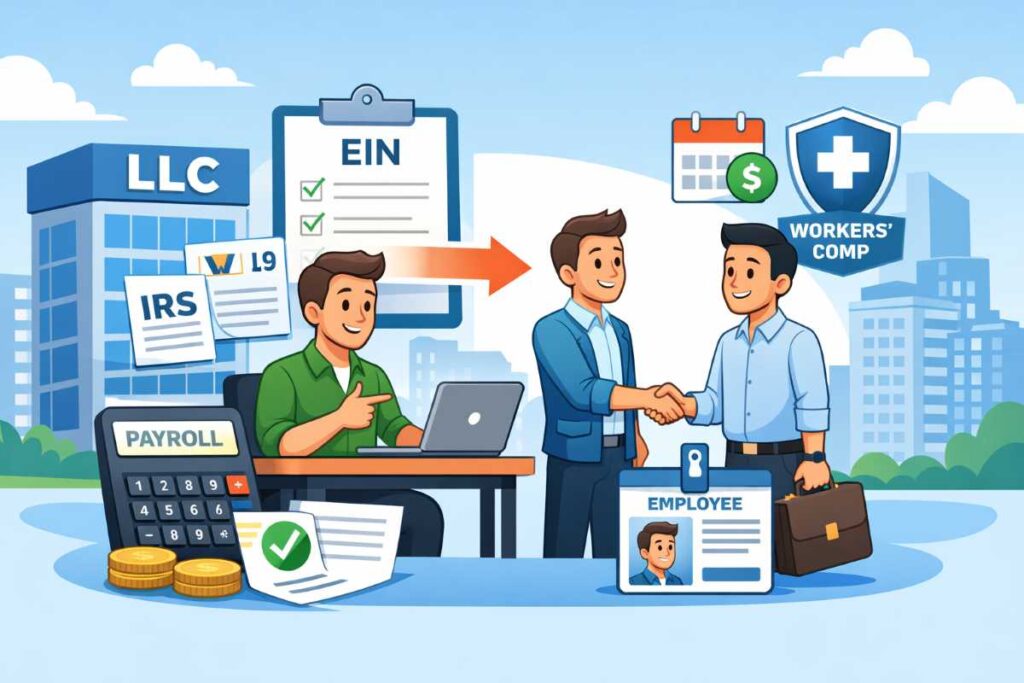
Before you can hire an employee, your LLC must be legally active and properly registered. If your LLC was recently formed, make sure it is in good standing with the state and that all formation documents have been approved. The first mandatory requirement is obtaining an Employer Identification Number from the IRS. An EIN is required for payroll, employee taxes, and reporting, even if your LLC is a single-member LLC. Without an EIN, you cannot legally hire employees.
Once you have your EIN, the next step is registering your LLC as an employer at the state level. This usually involves registering with the state tax agency and the state labor or employment department. These registrations allow you to withhold and pay state income taxes, unemployment insurance taxes, and other employment-related contributions. Each state has its own rules, and some require registration before the employee’s first working day.
After completing state registration, you need to set up a payroll system. Payroll is more than just paying a salary. It includes calculating gross wages, withholding federal income tax, Social Security, Medicare, and any applicable state or local taxes. Payroll records must be accurate and kept for several years. Many LLC owners choose payroll software or professional payroll services to avoid errors, missed deadlines, and penalties.
When hiring an employee, federal law requires specific forms to be completed. Form I-9 must be filled out to verify the employee’s identity and authorization to work in the United States. Form W-4 is also required so you can calculate the correct amount of federal income tax to withhold from the employee’s paycheck. Some states have additional tax or employment forms that must be completed as well.
Another critical requirement when adding an employee to an LLC is workers’ compensation insurance. Most states require LLCs with employees to carry workers’ compensation coverage, even if there is only one employee. This insurance protects both the employee and the business in case of work-related injuries or illnesses. Operating without required coverage can lead to severe fines or business suspension.
LLC owners must also understand the difference between an employee and an independent contractor. Employees are paid through payroll, receive a W-2 at the end of the year, and require tax withholding. Independent contractors are paid differently and receive a Form 1099. Misclassifying an employee as a contractor is a common mistake that can result in back taxes, penalties, and IRS audits. The IRS uses specific criteria to determine proper classification, and LLC owners should be cautious when making this decision.
After hiring an employee, ongoing compliance becomes part of running your LLC. This includes filing quarterly payroll tax reports, paying withheld taxes on time, submitting unemployment tax payments, and issuing annual W-2 forms. You must also follow labor laws related to minimum wage, overtime, employee rights, and workplace safety. Failure to comply with these obligations can expose your LLC to legal and financial risks.
Adding an employee to an LLC is not overly complex, but it requires careful planning and attention to detail. When done correctly, hiring employees allows your LLC to grow, operate more professionally, and increase its long-term success. By following the correct steps from the beginning, you protect your business and build a solid foundation for future growth.
Frequently Asked Questions About Adding an Employee to an LLC
Can a single-member LLC have employees?
Yes, a single-member LLC can legally hire employees. Once you hire your first employee, your LLC must obtain an EIN, run payroll, withhold taxes, and comply with federal and state employment laws just like a multi-member LLC.
Do I need an EIN to add an employee to my LLC?
Yes, an EIN is mandatory if you want to hire employees. The IRS requires an EIN for payroll processing, employment tax filings, and issuing W-2 forms to employees.
How much does it cost to hire an employee for an LLC?
The cost includes employee wages, employer payroll taxes, workers’ compensation insurance, unemployment taxes, and possible payroll software or service fees. On average, employers pay an additional 15–30% on top of an employee’s salary in taxes and benefits.
What taxes does an LLC pay for employees?
An LLC with employees must pay employer portions of Social Security and Medicare taxes, federal and state unemployment taxes, and withhold federal and state income taxes from employee wages. Tax obligations vary by state.
Do I need workers’ compensation insurance for one employee?
In most states, yes. Even if your LLC has only one employee, workers’ compensation insurance is usually required by law. Failing to carry coverage can result in fines or business suspension.
What is the difference between an employee and an independent contractor?
Employees work under your control, receive regular wages, and require tax withholding. Independent contractors control how they work and are paid without tax withholding using Form 1099. Misclassification can lead to serious penalties from the IRS.
Can a foreign-owned LLC hire employees in the US?
Yes, a foreign-owned LLC can hire US employees, but it must have an EIN, comply with payroll laws, and meet all federal and state employment requirements. Additional reporting obligations may apply.
🔧 تحسينات سيو إضافية (مهم جدًا)
✅ Internal Linking (روابط داخلية)
اربط هذا المقال بـ:
- After Getting an LLC: What’s Next
- Employee vs Independent Contractor for LLCs
- Do You Need Payroll for an LLC?
✅ Suggested URL
/adding-an-employee-to-an-llc/
✅ Category
LLC Management / Hiring Employees